What Web Hosting Cost in Kenya in 2026 (Real Numbers)
Short answer: for most small businesses, web hosting cost in Kenya runs from Ksh 500 to Ksh 4,000 a year. Cloud plans sit higher, at Ksh 449 to Ksh 899 a month.
That number surprises people in both directions. Some expect ten times more. Others paid ten times more last year and never noticed.
Ask five people what web hosting cost in Kenya means and you will get five answers. Two of them will be quoting a monthly price against someone’s yearly one.
Here is what web hosting cost in Kenya looks like in 2026, plan by plan:
| Plan | Price | Billing | Includes |
|---|---|---|---|
| SharedBasic | Ksh 2,000 (was 2,500) | per year | 20 GB NVMe SSD, cPanel, unlimited sites |
| SharedAdvanced | Ksh 3,500 | per year | 40 GB NVMe SSD, cPanel, unlimited sites |
| SharedEnterprise | Ksh 4,000 | per year | 80 GB NVMe SSD, cPanel, unlimited sites |
| CloudStarter | Ksh 449 | per month | 50 GB disk, 1 GB RAM |
| CloudExpand | Ksh 699 | per month | 80 GB disk, 2 GB RAM |
| CloudGrowth | Ksh 899 | per month | 100 GB disk, 4 GB RAM |
| WP Starter | Ksh 899 | per year | 10 GB, 1 website |
| WP Performance | Ksh 1,299 | per year | 20 GB, 2 websites |
| WP Business | Ksh 1,999 | per year | 30 GB, unlimited websites |
| Business Email | Ksh 500 | per year | business mailboxes |

The table hides the mistake that costs people the most money. Look at the billing column.
Cloud plans are billed monthly. Shared, WordPress and email plans are billed yearly.
Ksh 449 looks cheaper than Ksh 2,000, so most people assume cloud is the budget option. It is not. Multiply it out and CloudStarter comes to Ksh 5,388 a year, almost three times SharedBasic.
Compare web hosting cost in Kenya on one clock and the order flips:
- SharedBasic — Ksh 2,000 a year, about Ksh 167 a month
- WP Starter — Ksh 899 a year, about Ksh 75 a month
- CloudStarter — Ksh 449 a month, which is Ksh 5,388 a year
- Business Email — Ksh 500 a year, about Ksh 42 a month
You read that right. The WordPress plan costs less than half what the shared plan does.
That confuses people, so let me explain it plainly. WP Starter is built for one website and billed once a year. SharedBasic gives you cPanel, unlimited websites and 20 GB of NVMe, and those are the parts people actually shop for.
Both are honest prices. They just answer different questions.
Blame the labels, not the maths. “Shared” sounds like the starter option and “WordPress” sounds like the premium one, so a first-time buyer picks shared and pays about 1,100 shillings extra for a single site. Nothing breaks, and nobody complains afterwards, because the plan does work — it just costs more than it had to.
What Ksh 2,000 buys you
- Storage that stops being your problem. Twenty gigabytes of NVMe is far more than a typical business site uses. I have opened plenty of these accounts, and the files are usually under one gigabyte.
- Unlimited websites on all three shared plans. One account, several sites. Handy if you run a business site and a side project.
- Business email and SSL included. You do not need the Ksh 500 email-only plan on top, and the certificate is not an upsell.
- cPanel. The control panel your developer already knows, so you are not locked into somebody’s custom dashboard.
What Ksh 2,000 does not buy
- Room for a spike. A shared plan handles steady traffic and gets uncomfortable when an ad campaign lands all at once.
- A shop running paid ads. If you are spending real money on Meta or Google, spend the Ksh 449 too. The web hosting cost in Kenya jumps to 5,388 a year at that point, and it is the cheapest insurance you will buy.
- Someone to fix your theme. Hosting is the server, not your designer.
One detail worth checking on the invoice: SharedBasic shows Ksh 2,500 crossed out, with 2,000 as the current price. Treat a crossed-out figure as a promotion until the renewal invoice confirms it, because that is exactly where budget surprises start.
If you remember one thing from this section, make it the billing cycle. A monthly plan is not automatically cheaper than a yearly one. That column is where the real web hosting cost in Kenya hides, and it is the column almost nobody reads.
The one-line version: web hosting cost in Kenya is roughly Ksh 167 a month on a yearly plan, and Ksh 449 a month if you choose cloud.
Why the Same 1 GB Costs Ksh 449 Here and Ksh 4,500 Elsewhere
Two quotes, same client, same week. One host wanted Ksh 449 a month for a gigabyte of RAM and 50 GB of disk. Another wanted 4,500 for a package that listed the same two numbers.
Treat the second figure as illustrative rather than the published rate of a named host. It is the sort of number that turns up whenever someone shops with no price list in front of them, and it explains why so many people assume hosting is a rip-off.
It is not. Web hosting cost in Kenya is almost never about the gigabyte, and once you see where the money actually goes, four times the price stops looking like a swindle.
Five things you are actually paying for
- The type of disk. NVMe storage answers requests several times quicker than the older SATA drives that cheap hosts still run. You cannot see the difference in an advert. You feel it every time someone loads a page.
- Where the server sits. A machine in Nairobi answers a Nairobi visitor almost instantly. A server in London adds roughly a tenth of a second to every request, before a single file arrives.
- How many neighbours you share it with. This is the big one. One host puts 200 accounts on a server, another puts 800, and both advertise the same 20 GB.
- Support. Trained people are the most expensive item on a host’s bill and the first one cut. That is the real difference between Ksh 2,000 and Ksh 900 a year.
- The control panel and the extras. A cPanel licence costs the host money every month, per account. Free SSL, mailboxes and backups cost something too, even when they are not charged to you.

Rank a host on those five and the price stops looking random. The one quoting 449 is not being generous, and the one quoting 4,500 is not automatically greedy. They made different choices in places you cannot see from the advert, and a fair web hosting cost in Kenya reflects those choices.
The same logic explains why web hosting prices in Kenya swing so wildly for identical-looking specs. A table comparing gigabytes and shillings compares the cheapest of the five and ignores the four that matter. That gap is the difference between a headline web hosting cost in Kenya and the invoice that arrives in month two.
What “unlimited” really means
Unlimited storage almost always has a file cap, usually a few hundred thousand files, and a CPU limit that quietly suspends heavy sites. Neither is dishonest, as long as somebody tells you.
On shared hosting you are also renting a slice of memory, not a measured amount of it. That 1 GB of RAM on a cloud plan is yours alone; the equivalent on shared belongs to everybody on that server at once.
That is why shared hosting price in Kenya looks unbeatable at the bottom and cloud looks expensive at the top. You are not buying more disk. You are buying a smaller crowd.
Four questions that separate a real price from a headline price
- Where is the server, exactly? Ask for the city. “Europe” is not an answer when your customers are in Kisumu.
- How many accounts share one server? Plenty of hosts will not say. That silence is your answer.
- What happens when I hit the CPU limit? A throttle slows one site. A suspension takes the whole account down.
- Is support local, and until what time? Ours runs 8am to 6pm, Monday to Saturday, with a real person on the other end. A 24/7 number that reaches a script is not the same product.
None of this means the cheap option is a trap. For a five-page brochure site, a Ksh 2,000 shared plan is the correct purchase, and I will argue that in the next section.
It does mean cheap web hosting in Kenya is rarely cheap for the reason the advert gives. You are paying less because somebody chose a slower disk, a fuller server, or a thinner support desk. Knowing which one, before you pay, is the whole skill.
And if you take one thing away from this: web hosting cost in Kenya should be explainable. Any host who cannot tell you where the server is and what happens at your CPU limit is charging you for something they would rather not describe.
Shared, Cloud, WordPress or Email: What Should You Pay For?
Most people reach this question backwards. They compare prices first, pick whatever looks affordable, and find out six months later that it cannot do the job.
The order should be the other way round. Decide what the site has to do, and the plan mostly chooses itself.
Shared hosting: the default, and that is not an insult
Shared is the Ksh 2,000 plan, and it suits more people than any other option. You get cPanel, unlimited websites, free SSL, unlimited business email accounts and a free .co.ke domain. See the shared hosting plans.
Pick it if you are putting a business online for the first time, or running a brochure site with a contact form. A five-page site, a portfolio, a school or church page: this is the plan for it.
Do not pick it if you sell through a busy shop or run ads at scale. You will meet the CPU limit on your best day, never your worst.
WordPress hosting: for the site you would rather not maintain
WP Starter costs Ksh 899 a year, less than half the shared plan, and includes automatic WordPress updates and a free .co.ke domain. That is genuinely cheaper, not a downgrade. Compare the WordPress hosting plans.
The catch is scope, not quality. WP Starter holds one website and 10 GB, while WP Business takes unlimited websites and 30 GB for 1,999 a year.
Pick it if your site runs on WordPress and you want core and plugin updates handled without you thinking about them. Do not pick the 899 plan if you need several separate sites on one account.
Cloud hosting: for traffic you cannot predict
Cloud plans start at Ksh 449 a month, and they are the only ones where the RAM is yours alone. CloudStarter gives 1 GB and 50 GB of disk; CloudGrowth gives 4 GB and 100 GB. Look at the cloud hosting plans.
Pick it when a slow afternoon costs you money. A shop, a booking system, a campaign that might land all at once.
Do not pick it for a brochure site, and do not pick it because cloud sounds modern. At 5,388 a year against 2,000, that is an expensive word, and it is the easiest way to double your web hosting cost in Kenya for no gain.
Email hosting: the Ksh 500 answer
If you already have a website somewhere and all you need is [email protected], you do not need hosting at all. The business email hosting plan is Ksh 500 a year with free setup.
Pick it if your site lives elsewhere, or a developer hosts you and you only want mailboxes on your own domain.
The short version
| If this sounds like you | Buy this | Cost |
|---|---|---|
| First website, brochure, contact form | SharedBasic | Ksh 2,000 a year |
| Room to grow, more storage | SharedAdvanced | 3,500 a year |
| Several sites on one account | SharedEnterprise | 4,000 a year |
| WordPress, updates handled | WP Starter | 899 a year |
| WordPress, multiple sites | WP Business | 1,999 a year |
| A shop, bookings, or paid ads | CloudStarter | 449 a month |
| Mailboxes on your domain only | Business Email | 500 a year |
If you are still unsure after reading that, you are shared. It is the honest default, and moving up later is a two-minute job compared with paying for headroom you never use.
The signal to upgrade is not a calendar date. Nobody’s web hosting cost in Kenya should go up just because a year passed. Watch for a page that takes longer than three seconds on a normal connection, or an email from your host about CPU usage more than once in a year.
I wrote the longer version of this decision, including what changes when you add staff or a second brand, in choosing the right hosting plan.
And this is why the earlier arithmetic matters. Web hosting prices in Kenya are only comparable once you know which of the four types you need. Put a 449 monthly cloud quote beside a 2,000 yearly shared quote and you have learned nothing except that the numbers are different.
So the fair question is not what web hosting cost in Kenya comes to. It is what your site has to do, and then what that costs.
The Costs the Price List Leaves Out
When people ask what web hosting cost in Kenya is, they usually mean the plan price. That is the number everyone quotes, and the one that matters least once the extras arrive. Not because the extras are huge — because nobody budgets for them.
Here is what else turns up on a Kenyan hosting invoice in year one.
The domain, and what happens in year two
Shared and WordPress plans include a free .co.ke domain, and that is a real saving at signup. What the signup page does not tell you is what renewal costs.
Kenya’s registry, KeNIC, charges registrars Ksh 999 plus VAT for a .co.ke, up from 700 since February 2025 — KeNIC raised those fees across the board. Registrars add a margin on top, so most Kenyan hosts bill somewhere between 1,200 and 2,000 shillings a year.
Ask for the renewal figure before you count a free domain as a discount. A free first year followed by an unmentioned 2,000 shilling renewal is not free. It is a delayed charge, and it is the most common way web hosting cost in Kenya rises in year two without anybody upgrading a thing.
SSL, which stopped being a real cost years ago
A decade ago a certificate was a line on the invoice. Today the free kind is good enough for a business site, and all four plan types here include it.
If someone quotes you for SSL, ask which certificate and why. There are cases where a paid one earns its money, like a payment gateway that insists on it. “Because we can charge for it” is not one of those cases.
Migration, if you are moving
Moving an existing site is either an afternoon or a week of your life, and the deciding factor is usually email rather than files.
Files copy across cleanly. Mailboxes are where it goes wrong, because DNS records decide where mail lands and they take time to settle.
Before you move, ask two things. Is migration included, and who fixes it if the mail breaks on a Monday morning? Domain moves have their own rules too, which is why transferring your domain is a separate job with its own paperwork.
Your own time, which is the biggest number
This is the cost nobody puts in a comparison table, including me. Ten hours spent fixing a theme on a Ksh 900 plan is not cheaper than a Ksh 2,000 plan that works.
If you are paying a developer by the hour, hosting is almost never the expensive part. Paying 500 shillings less for a host that breaks twice a year is a false economy, and I have watched it happen to people who were being careful.
Themes, plugins and page builders
A free theme is free until you want the pro version, and a shop rarely stays on free extensions. Budget a few thousand shillings a year if you sell online, or accept that the free versions will do less than the tutorials promise.
VAT and receipts
If you claim hosting as a business expense, the receipt matters as much as the price. Check that your host issues a proper VAT invoice, and that it arrives in a form your accountant can file without three emails.
That is not a small thing in Kenya. A Ksh 2,000 plan with clean paperwork is worth more than a 1,500 one you cannot expense.
The honest total
Add it up and year one looks like this: the plan, roughly 1,200 to 2,000 for a domain if yours is not included, and your own time. Nothing dramatic. Priced across a full year rather than a single line, web hosting cost in Kenya stops being one number and becomes a budget.
The problem is not the size of the extras. It is that they arrive one at a time, months apart, and each one feels like a surprise rather than a cost you agreed to.
That is the difference between domain and hosting cost in Kenya as it is advertised and as it is paid. Price the whole year before you sign, and the surprises mostly stop.
If you want the longer list of traps, including the ones I have seen people fall into with “unlimited” plans, I wrote about the hidden fees of cheap hosting separately.
How to Pay for Hosting in Kenya (and Get a Receipt Your Accountant Accepts)
Payment is the part of buying hosting nobody researches, and then it becomes the part that goes wrong.
A card that expired. A renewal that arrived on a Sunday. A receipt your accountant refuses in March.
None of that is hard to avoid. It needs five minutes of thought before you pay rather than after.
M-Pesa, cards and bank transfer
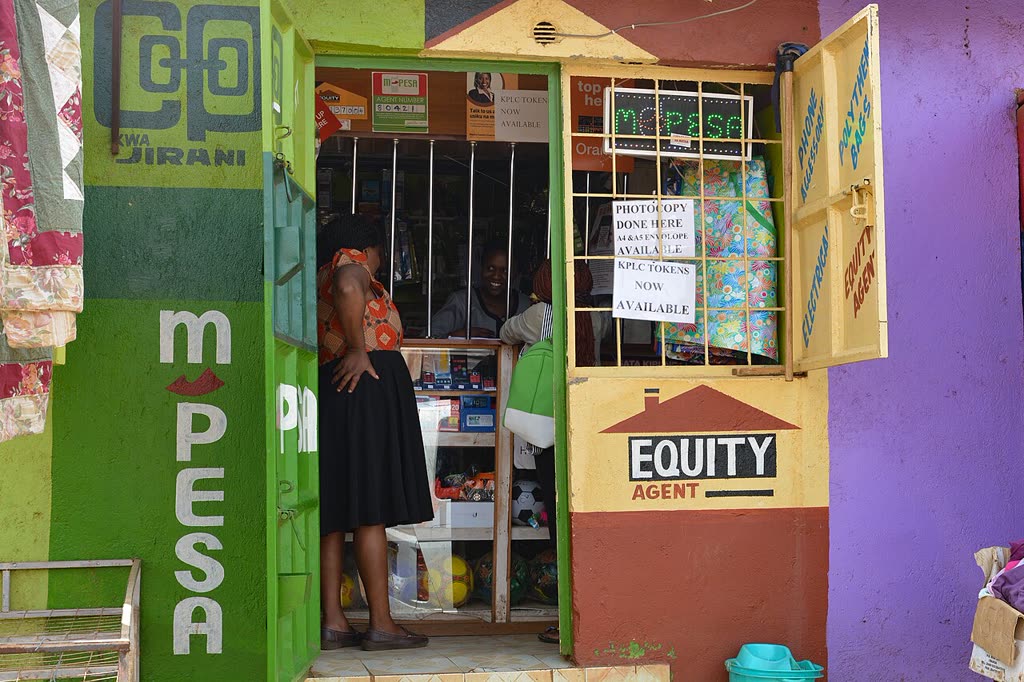
All three work here: M-Pesa, debit or credit cards, and bank transfer. Most people choose M-Pesa, and for a Ksh 2,000 yearly plan that is the sensible choice.
One check before you send money to any host. Confirm the M-Pesa number belongs to the company rather than a person. A paybill or till tied to a registered business gives you a payment you can trace; a personal number gives you a favour.
That is the whole difference between being a customer and hoping. I have watched people pay a “host” they met on WhatsApp, then discover there is no invoice, no ticket number and nobody answering when the site goes down.
Cards, and the exchange rate nobody mentions
A card is fine, especially if the plan is priced in shillings, because then the figure on the invoice is the figure that leaves your account.
The trouble starts when a host prices in dollars. Your bill then moves with the exchange rate, and a plan that cost 1,800 last year can bill 2,300 this year without the host changing a thing. Ask what currency the invoice is in before you compare prices.
Bank transfer, for anyone who needs the paperwork first
Companies usually cannot pay from a card without an invoice in hand, and that is where transfer helps. Ask for a proforma invoice, pay against it, and keep the bank slip with the tax invoice. That combination is what survives an audit.
The receipt your accountant will actually accept
Three things to confirm before you pay. Is the host VAT registered, does the tax invoice show a VAT number with the VAT line visible, and does the invoice come through eTIMS?
Hosting is a standard-rated service in Kenya, so expect 16% VAT when the supplier is registered. If the invoice shows 2,000 with no VAT line, one of two things is true. Either the host is not registered, or the price already includes VAT, and your accountant will want to know which.
This is the unglamorous reason web hosting cost in Kenya is not just a headline number. A 2,000 shilling plan with a clean tax invoice is worth more to a business than a 1,500 one it cannot claim.
Renewal is the month nobody diarises
Shared, WordPress and email plans renew yearly, cloud renews monthly, and every one of them has a date. Put it in a calendar with a reminder a week early.
Three things go wrong at renewal: the card on file expires, the email address changes so the reminder lands nowhere, or a promotional price ends and the renewal quietly arrives at the list rate.
That last one is worth checking on any crossed-out price, including ours. SharedBasic shows 2,500 struck through and 2,000 as the current figure, so ask whether renewal is 2,000 or 2,500 before you build a budget around it.
Five things to check before you pay
Two minutes with this list prevents most of what goes wrong above, and it is the part of web hosting cost in Kenya that no price comparison shows.
- The company name on the invoice matches the name you registered.
- VAT appears as its own line, or you have it in writing that it does not apply.
- The renewal date and renewal amount are both stated.
- The money goes to a business paybill or a company bank account, never a personal number.
- You know where to get help, and during which hours. Ours runs 8am to 6pm, Monday to Saturday.
Do those five and paying for hosting stops being the risky part of the year. It becomes the boring part, which is exactly what you want from a bill.
The web hosting cost in Kenya conversation usually ends at the price. It should end at the invoice, because that is the document your business actually keeps.
How to Lower the Bill Without Wrecking the Site
Saving money on hosting is mostly about not buying things you will never use. It is less exciting than it sounds, and it works.
Here are the moves that actually reduce the bill, in the order I would make them.
Pay yearly where yearly is cheaper
Shared, WordPress and email plans bill annually, and that is where the saving sits. Ksh 2,000 a year is about 167 shillings a month, paid once.
Cloud is the exception, and monthly billing suits it. You may outgrow a cloud plan or drop it after a campaign, and locking a year of that in makes no sense.
Right-size before you renew
Look at what you actually use, not what you might use one day. Most business sites sit well under a gigabyte of files. Right-sizing is the fastest way to cut web hosting cost in Kenya, because almost everyone is paying for storage they will never fill.
If you are on SharedEnterprise at 4,000 with 2 GB of storage used, SharedAdvanced does the same job for 3,500. That is 500 shillings saved for one click, and the only risk is that you will have to move up again if you grow.
Skip the extras you will not touch
Site builders, premium themes, extra domains on a one-page site, SEO add-ons that duplicate a plugin you already have. Each looks small. Together they regularly cost more than the hosting.
Ask one question about every add-on: will I use this in the next thirty days? If the honest answer is “maybe later”, it is a no.
Move to cloud when traffic forces it, not before
CloudStarter is 5,388 a year. SharedEnterprise, with 80 GB, is 4,000.
So you are paying 1,388 more for 1 GB of RAM that belongs to you alone, and 30 GB less disk. That trade is worth it for a shop or an ad campaign. It is not worth it for a brochure site, however modern “cloud” sounds.
That is the trap in comparing plans by price alone. On a web hosting cost in Kenya table, those two plans sit 1,388 apart. In practice one is built for a shop and one is built for a brochure, and buying the wrong one costs more than the difference.
The trigger to move is a page that takes longer than three seconds under real traffic, or a host warning about CPU limits more than once in a year. Not a launch date.
Don’t cut the email corner
The Ksh 500 email plan looks like the easiest saving on the list. Use a free Gmail address instead and keep the 500.
Except the invoice you send now comes from [email protected], and that is the first thing a cautious customer checks before paying. It costs you more in trust than it saves in shillings.
Three savings that are not savings
- Switching hosts every year to chase 200 shillings. A migration is an afternoon of your life and a weekend of risk. Do it once, do it well.
- Dropping backups. The cheapest insurance you will ever buy is the copy of your site you never needed.
- Buying a plan without SSL and email, then paying for both separately. That usually costs more than the plan you avoided.
The comparison that matters
A 2,000 shilling plan you keep for five years costs 10,000 and about an hour of your attention. The same money spent moving between cheap hosts four times buys you four afternoons of work and one broken week.
So when people ask me how to reduce web hosting cost in Kenya, I tell them the truth. The saving is rarely in the plan. It is in not paying for two plans, and not paying twice for the same job.
What to Budget in 2026
For a normal business site, year one lands between 2,000 and 4,000 shillings.
At the bottom, SharedBasic at 2,000 with a free .co.ke domain and email included. At the top, 2,000 for the plan plus 1,200 to 2,000 for a domain you buy separately.
That is the whole budget for most people, paid once a year rather than every month.
Hosting is the cheapest part of a website, and the part that ruins it when it goes wrong. Nobody remembers which host you chose. They remember that the site was down on the day they tried to buy.
So the question is not how little you can pay. It is whether the thing you are paying for will still answer the phone in year two.
If you already know which type fits, the four plans are here: shared hosting for a first site, WordPress hosting if you want updates handled, cloud hosting for real traffic, and business email hosting if you only need the mailboxes.
If you are still unsure, start with shared. You can move up in an afternoon, and you cannot get back the year you spent paying for a plan you did not need.
And if you take one thing from all of this, take the billing column. The rest of web hosting cost in Kenya is detail. Month against year is the number that decides what you actually pay.