
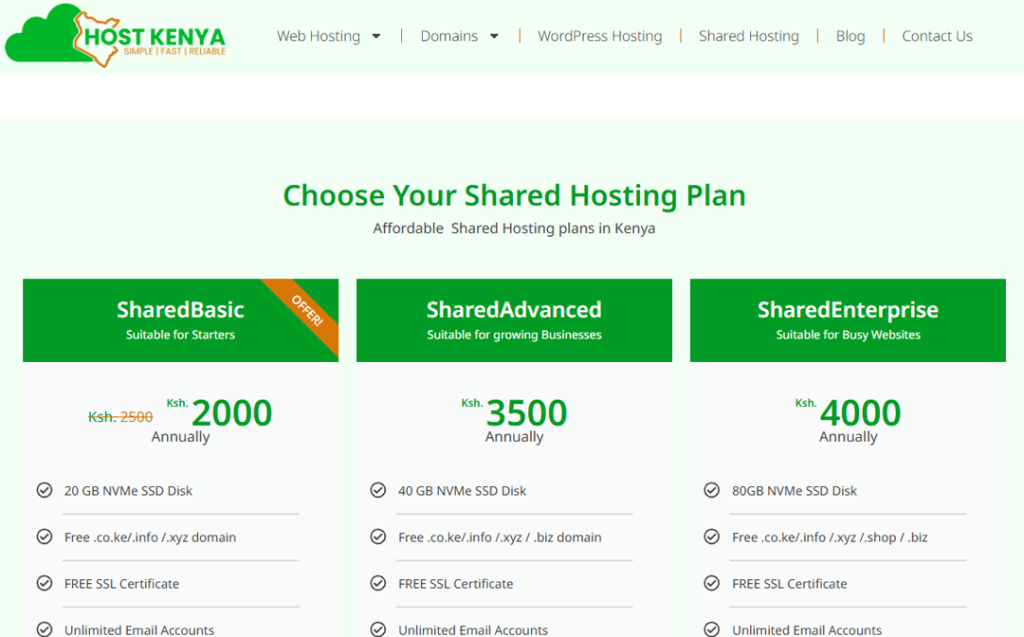
Choosing the right web hosting plan in Kenya is the foundational step for any successful online presence, whether you are launching a personal blog, a business website, or a large e-commerce store. The wrong choice can lead to slow loading times, frequent downtime, and a frustrating experience for both you and your visitors.

The Kenyan market, being highly dynamic, offers a variety of hosting solutions. Understanding the core difference between these options is critical to making an informed investment. This section will break down the most popular types of hosting and their unique value propositions.
A Crucial Comparison of Hosting Types for the Kenyan Market
The world of web hosting can be broadly categorized into a few main types, each designed to meet different needs in terms of budget, performance, and management.
1. Shared Hosting: The Economic Entry Point
Shared hosting is, by far, the most popular and affordable hosting plan in Kenya, making it the de facto starting point for most small businesses and individual bloggers.
- The Concept: Imagine shared hosting as a large apartment building. Many websites (tenants) reside on a single, powerful server (the building). All resources—CPU, RAM, and disk space—are shared among all the accounts.
- Key Features & Value:
- Low Cost: Costs are kept low because the provider splits the server maintenance expenses across hundreds of users. Prices in Kenya for basic shared hosting can start from as low as KES 2,500 – KES 4,500 per year (approximately KES 200 – 375 per month).
- Ease of Use: It typically comes with a user-friendly control panel (like cPanel or Plesk), allowing non-technical users to manage files, databases, and emails easily.
- Inclusions: Standard packages often include a Free SSL Certificate, multiple email accounts (using your domain name), and one-click installers for popular platforms like WordPress.
- The Caveat (Neighbor Effect): The main limitation is performance. If another website on your shared server experiences a massive traffic spike or is poorly optimized (a “bad neighbor”), your site’s speed and reliability can suffer due to the shared resource pool. This makes it less ideal for high-traffic or mission-critical e-commerce sites.
2. Managed WordPress Hosting: The Specialist Solution
This type of hosting plan in Kenya is a step up from basic shared hosting and is specifically engineered and optimized for websites built on the world’s most popular Content Management System (CMS), WordPress.
| Feature | Shared Hosting (General) | Managed WordPress Hosting |
| Server Environment | Optimized for multiple CMS/languages (e.g., WordPress, Joomla, PHP, HTML) | Fine-tuned exclusively for WordPress for maximum speed. |
| Performance | Performance varies based on “neighbors” and traffic spikes. | Superior, consistent performance with advanced caching (e.g., Varnish, Redis) and CDN integration. |
| Management & Maintenance | User handles all WordPress core, plugin, and theme updates. | Host handles automatic core updates, security patches, and daily backups. |
| Security | Basic shared security (firewall, malware scanner). | Enhanced, proactive WordPress-specific security and monitoring tools. |
| Support | General hosting support. | Expert WordPress support team that can troubleshoot WP-specific issues. |
| Cost (Annual Est.) | KES 2,500 – KES 10,000 | KES 6,000 – KES 25,000+ (Higher, but covers maintenance costs) |
Case Study Snippet: The Startup Blog A Kenyan tech startup launched its blog on a basic shared hosting plan in Kenya. Initially, it was fine. As their content went viral, their site frequently became slow and occasionally crashed during peak hours. Migrating to a Managed WordPress Hosting solution resolved this instantly, as the new server infrastructure was built to handle sudden traffic surges efficiently, ensuring a consistent user experience and allowing the startup to focus solely on content creation, not server maintenance.
In summary, for most beginners and small-to-medium businesses in Kenya, the choice boils down to:
- Shared Hosting: If you are highly budget-conscious, have a simple website (like a brochure site or portfolio), and don’t anticipate heavy traffic volumes.
- Managed WordPress Hosting: If your business relies on its WordPress website for revenue (e-commerce, serious blogging, lead generation) and you value speed, security, and a hands-off approach to maintenance, justifying the higher cost.
3. Key Performance Indicators (KPIs) for Web Hosting in Kenya
Selecting a web hosting provider in Kenya requires evaluating several critical Key Performance Indicators (KPIs) and factors to ensure your website’s success, particularly concerning local performance and reliability. The most important KPIs can be broadly categorized as: Reliability & Performance, Security, and Customer Support.
3.1 Reliability and Performance
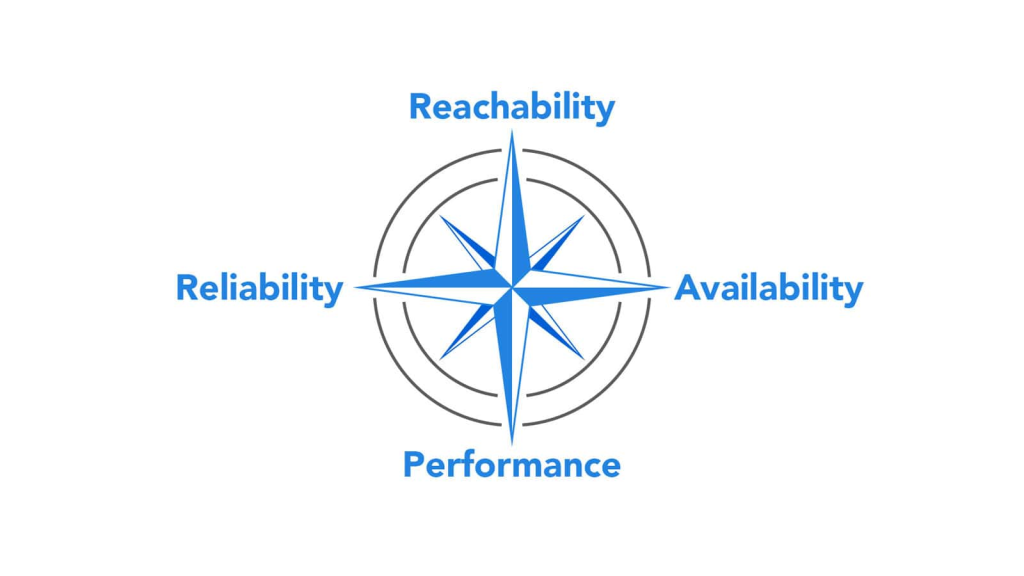
These KPIs directly impact user experience, SEO ranking, and ultimately, your business’s bottom line.
| KPI/Factor | Recommended Standard (Kenyan Context) | Evaluation Methods |
| Uptime Guarantee | 99.9% or higher (The industry standard. Anything lower means significant downtime.) | – Check the Service Level Agreement (SLA): Look for the formal guarantee and how they compensate for breaches. – Third-party Monitoring Tools: Use services like Pingdom or UptimeRobot to track the host’s performance over time. |
| Server Response Time (TTFB) | 0.8 seconds (800ms) or less. Lower is better; under 200ms is excellent. | – Time to First Byte (TTFB): Use tools like Google PageSpeed Insights or WebPageTest to test the TTFB from a location close to Kenya. – Local Server Location: Prioritize hosts with servers physically located in or close to Kenya (e.g., in Kenyan data centers) to minimize latency for local visitors. |
| Page Load Speed (LCP) | 2 seconds or less (especially for e-commerce). | – Page Load Speed Tests: Use tools like GTmetrix, Pingdom, or Google PageSpeed Insights to measure the time it takes for a page to fully load, focusing on the Largest Contentful Paint (LCP) metric. |
| Scalability | Easy and immediate options to upgrade from shared hosting to VPS or dedicated servers without significant downtime or migration costs. | – Review Hosting Plans: Check the host’s offering for higher-tier plans (VPS, Dedicated, Cloud) and the documented process for upgrading. |
3.2 Security Features
Security is non-negotiable, protecting your data, your customers, and your reputation.
| Key Security Feature | Importance (Kenyan Context) |
| SSL Certificates | Crucial. Essential for encrypting data, building user trust, and required for better SEO (Google ranks secure sites higher). Many reputable hosts in Kenya offer a Free Let’s Encrypt SSL. |
| Regular Backups | High. The host should provide frequent (daily or weekly) and automated backups with an easy restoration process. This protects against data loss from hacks, errors, or hardware failure. |
| DDoS Protection | High. Protection against Distributed Denial of Service (DDoS) attacks to prevent your site from being overwhelmed and taken offline. |
| Firewalls & Malware Scanning | Essential. Robust, server-level firewalls and proactive malware detection and removal services. |
3.3 Customer Support

Reliable support is vital, especially for non-technical users, as technical issues can arise at any time.
| KPI/Metric | Recommended Standard | Evaluation Methods |
| Availability | 24/7/365 via multiple channels (Live Chat, Phone, Email/Ticketing). Phone or Live Chat are preferable for urgent issues. | – Test their response time: Contact support (especially live chat/phone) before signing up to gauge their speed and knowledge. – Check for local support and knowledge of Kenyan-specific issues. |
| First Response Time (FRT) | Live Chat/Phone: Instant to a few minutes; Email/Ticket: Under 1 hour. | – Check customer reviews and testimonials regarding support response times. |
| First Contact Resolution (FCR) | High percentage. The ability of the first agent to resolve the issue without passing it to multiple departments or requiring multiple interactions. | – Test with a simple, common issue during your initial evaluation. |
| Customer Satisfaction (CSAT) | High score. (e.g., above 85-90%) | – Look for public customer reviews and social media sentiment. |
By prioritizing these KPIs and evaluation methods, you can make a data-driven decision when selecting the best web hosting provider for your needs in the Kenyan market.
1. Primary Hosting Financial Models (Pricing Structures)
Web hosting providers in Kenya, both local and international, primarily use four financial models based on the type of hosting infrastructure they sell:
A. Shared Hosting (The Entry-Level Model)
- Model: This is the most common and cheapest model. Multiple websites share the resources (CPU, RAM, disk space) of a single physical server.

- Pricing: Typically sold on an annual subscription basis. Prices are low to moderate, ranging from approximately Ksh 1,500 to Ksh 7,500 per year for starter plans.
- Target: Small blogs, personal websites, and small businesses with low traffic.
- Value-Add Focus: Affordability, ease of use (usually with a cPanel or DirectAdmin control panel), and often includes a free domain (e.g.,
.co.ke) and a free basic SSL certificate for the first year to attract new customers.
B. Virtual Private Server (VPS) Hosting (The Growth Model)
- Model: The physical server is partitioned into several independent virtual servers (VPS). Each VPS has dedicated resources (guaranteed CPU, RAM, and SSD storage) that are not shared with other users.
- Pricing: Primarily sold on a monthly or annual subscription basis, with prices significantly higher than shared hosting. Entry-level VPS plans generally start from around Ksh 1,500 to Ksh 6,000 per month (or Ksh 18,000 to Ksh 72,000+ per year).
- Target: Growing businesses, e-commerce sites, high-traffic blogs, and developers who need root access and more control.
- Value-Add Focus: Performance, scalability, dedicated resources, and root access for server customization.
C. Cloud Hosting (The Scalable Model)
- Model: Resources are distributed across a network of interconnected servers (a “cloud”), offering high availability and elasticity.
- Pricing: Often uses a pay-as-you-go or resource-based monthly billing structure. Prices can start relatively low (around Ksh 960 per month) but can scale up rapidly depending on resource consumption.
- Target: Websites with fluctuating traffic, applications requiring high uptime, and developers looking for high flexibility.
- Value-Add Focus: On-demand scalability and high reliability (if one server fails, the site is hosted on another).
D. Dedicated Server Hosting (The Enterprise Model)
- Model: The client rents an entire physical server, providing maximum control, performance, and security.
- Pricing: The most expensive model, billed monthly, with prices typically starting from around Ksh 6,000 to Ksh 20,000+ per month for entry-level dedicated servers.
- Target: Large enterprises, high-traffic applications, and businesses with strict security or compliance needs.
- Value-Add Focus: Maximum performance, full control over the hardware and software environment, and security.
2. Key Value-Added Services and Bundles
Web hosts bundle essential services to improve customer attraction and retention, often including:
| Service Category | Typical Offering in Kenya | Financial Implication |
| Domain | Free .co.ke or discounted .com domain for the first year. | Attracts first-time buyers; the renewal is a crucial recurring revenue point. |
| Security | Free basic Let’s Encrypt SSL Certificate with all plans; paid upgrades for Wildcard or Extended Validation (EV) SSL. | Increases customer trust; SSL is now a minimum requirement for all sites. |
| Control Panel | Free access to cPanel or DirectAdmin (standard for shared hosting). | Simplifies management, reducing the need for technical support. |
| Backups | Free Weekly or Daily Automated Backups. | Essential for disaster recovery; may charge extra for higher frequency or long-term retention. |
| Support | 24/7 technical support via phone, chat, or WhatsApp. | A key differentiator, particularly for non-technical users. |
| Migration | Free website migration from a competitor. | Lowers the barrier for customers to switch providers. |
3. The “Hidden” Costs and Renewal Hikes 💸
The financial model often relies on a low introductory price (the “loss leader”) followed by significantly higher renewal fees. Customers must read the fine print to avoid these common traps:

- The Renewal Price Hike: This is the most significant hidden cost. A plan advertised for Ksh 2,000/year might renew at its “standard rate” of Ksh 4,000 – Ksh 6,000/year. The initial discount is for the first term only.
- Free Domain/SSL Expiration: The “free domain” and “free SSL” often only apply for the first year. Renewal of the domain (e.g., Ksh 1,000 – Ksh 2,000/year for a
.co.ke) and certain SSLs may be billed separately upon renewal. - Essential Add-ons: Services that seem standard might be charged as extras:
- Premium Email Hosting: Separate from basic email accounts, often required for professional businesses.
- Advanced Backups/Restores: While basic backups might be free, an urgent manual restore might incur a service fee.
- Website Builder: Often free in the basic plan, but the better templates or e-commerce features require a paid upgrade.
- Setup Fees: While rare for shared hosting, some VPS or reseller accounts may have a one-time setup fee.
The Financial Landscape of Web Hosting in Kenya 🇰🇪
Web hosting costs in Kenya can range dramatically, from basic shared hosting to premium dedicated servers. Understanding the financial models, typical pricing, and potential hidden costs is crucial for making an informed decision.
1. Typical Hosting Types and Annual Price Ranges
Web hosting providers in Kenya, both local and international, generally segment their services into packages based on resource allocation and performance, with prices typically quoted and payable in Kenya Shillings (KSh) or sometimes US Dollars (USD).
| Hosting Type | Target User | Typical Annual Price Range (KSh) | Key Advantage |
| Shared Hosting | Small websites, blogs, personal portfolios, startups. | KSh 2,000 – KSh 7,500 | Most affordable and easiest to manage. |
| WordPress Hosting | Bloggers, small businesses using WordPress. | KSh 3,000 – KSh 10,000 | Optimized for WordPress speed and security. |
| Virtual Private Server (VPS) | Growing websites, e-commerce, complex applications. | KSh 18,000 – KSh 72,000+ | Better performance, dedicated resources, and root access. |
| Dedicated Server | Large enterprises, high-traffic websites, custom applications. | KSh 72,000 – KSh 250,000+ | Maximum power, control, and performance. |
Note: These are general entry-level to mid-tier ranges for local providers. International providers may quote lower initial prices in USD, but currency fluctuations and higher renewal rates can change the final cost.
2. Value-Added Services and Features
Most Kenyan hosting packages bundle several essential services to add value and simplify the process for customers:

- Free Domain Name: Often included for the first year with annual shared hosting plans (typically a .co.ke or .com domain).
- Free SSL Certificate: An absolute necessity for security and search engine ranking. Most hosts provide a free basic SSL (like Let’s Encrypt).
- Control Panel: Industry-standard panels like cPanel or DirectAdmin are usually included for easy management of files, databases, and emails.
- Email Hosting: Professional email addresses (e.g.,
[email protected]) are standard, with storage limits varying by plan. - Backups: Daily or weekly automated backups are a key feature, with premium plans sometimes offering longer retention periods or more recovery control.
- Local Support: Many local Kenyan hosts offer support via accessible channels like M-Pesa payment, local phone calls, and WhatsApp, which is a significant practical advantage.
3. Hidden Costs and Renewal Price Hikes ⚠️
The most significant financial pitfall in web hosting is the deceptive introductory pricing model.
A. Renewal Price Hikes
Many providers offer a heavily discounted first-year rate (sometimes up to 80% off) to attract new customers. The “standard pricing upon renewal” can be two to three times higher than the initial cost.
| Service | Introductory Price Example (KSh) | Renewal Price Example (KSh) |
| Shared Hosting (1 Year) | KSh 2,500 | KSh 7,500 |
| Domain Registration (.com) | KSh 1,200 | KSh 1,800 – KSh 2,200 |
B. Common Hidden Fees
Always check the fine print for these extra costs:
- Domain Name Discount: If your plan includes a “Free Domain for the first year,” you will pay the full renewal price in the second year.
- Premium Backups: Basic backups might be free, but instant, one-click restoral or longer-term archiving may require a separate, paid service.
- Migration Services: While many local hosts offer free website migration, complex or large migrations might incur a one-time fee.
- WHOIS Privacy Protection: This keeps your contact information private, but many registrars charge an annual fee for it (KSh 500 – KSh 1,200).
- Expired Domain Recovery: If a domain expires, recovering it from the grace or redemption period can incur a large penalty fee (upwards of KSh 12,000 for a .com domain).
The best practice is to always look at the renewal price, not just the first-year price, when calculating your long-term budget.
4. Head-to-Head: Shared Hosting vs. VPS Hosting in Kenya ⚖️
Choosing between Shared and Virtual Private Server (VPS) hosting is the most critical decision for any growing website or small business. It’s the difference between renting an apartment (Shared) and renting a townhome with private utilities (VPS).
Here is a direct cost and performance comparison to help you determine which one offers the best value for your specific needs:
A. Shared Hosting: The Budget Starter 🚀
Shared hosting is the most budget-friendly option because your website shares server resources (CPU, RAM, disk space, and bandwidth) with hundreds of other websites.
| Factor | Description |
| Best For | New websites, small business static sites, personal blogs, or low-traffic portfolios. |
| Annual Cost | Low (KSh 2,000 – KSh 7,500 per year). |
| Performance | Variable. Performance can slow down (the “bad neighbor effect”) if another site on the server experiences a sudden traffic spike. |
| Control | Low. You are limited to the control panel (cPanel/DirectAdmin) and cannot install custom software or get root access. |
| Technical Skill | None required. The hosting provider manages all server maintenance and security. |
B. VPS Hosting: The Scalable Upgrade 📈
VPS hosting uses virtualization technology to divide a physical server into several isolated virtual machines. Each VPS operates like a dedicated server, guaranteeing you a specific allocation of resources (RAM and CPU).
| Factor | Description |
| Best For | E-commerce stores, high-traffic blogs, custom web applications, or businesses needing specific software configurations. |
| Annual Cost | Mid-Range (KSh 18,000 – KSh 72,000+ per year). |
| Performance | High & Stable. Your site’s speed is protected from other users on the same physical machine. |
| Control | High (Root Access). You have complete control to install custom OS, server-side applications, and security measures. |
| Technical Skill | Required (for Unmanaged VPS). You are responsible for server maintenance, patching, and security. Managed VPS services, while more expensive, remove this burden. |
5. When to Upgrade from Shared to VPS
The question isn’t if you should upgrade, but when. You should consider moving to a VPS when you experience one or more of the following:
- Consistent Traffic Surges: Your website frequently hits its resource limits, causing slow loading times or 503 Service Unavailable errors.
- Increased Security Needs: You process sensitive customer data (like an e-commerce platform) and require a more isolated, secure environment than shared hosting can offer.
- Specific Software Requirements: Your application needs an operating system, database, or server module that isn’t supported by your shared host.
- Slow and Unpredictable Load Times: Your site’s speed is inconsistent, indicating that your “neighbors” on the shared server are draining resources.
VPS hosting is the sweet spot: you get the isolation and power of a dedicated server without the full cost. It offers the best balance of cost-effectiveness, stability, and control for any serious, growing online business in Kenya.
6. The First Step: Domain Name Registration and Pricing 🔗
A domain name is your website’s address on the internet, and its registration is the essential recurring cost that runs alongside your hosting package.
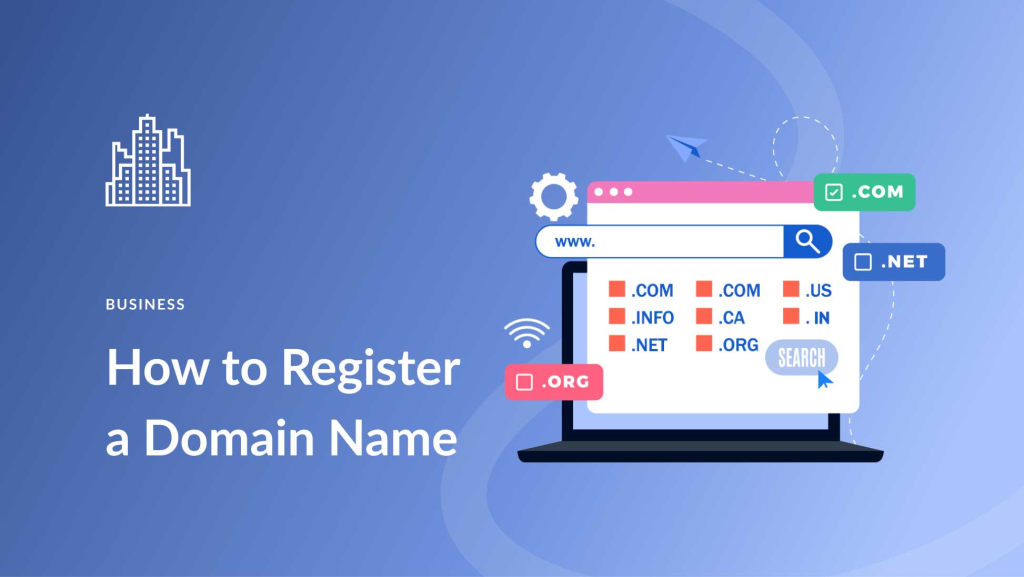
A. Cost of Kenyan vs. Global Domain Extensions
The price of a domain name depends primarily on its extension (the part after the dot, also called the Top-Level Domain or TLD) and whether you register it through a local or international registrar.
| Domain Extension | Typical Use Case | Average Annual Price (KSh) | Notes |
| .co.ke | Kenyan businesses and commercial entities. | KSh 1,000 – KSh 1,500 | Highly recommended for local trust and SEO benefits in Kenya. |
| .ke | Shorter, for individuals or organizations wanting a purely Kenyan identity. | KSh 1,400 – KSh 2,300 | A premium local TLD, often slightly pricier than .co.ke. |
| .com | Global businesses and international reach. | KSh 1,500 – KSh 2,500 | The most universally recognized extension; prices can fluctuate based on the USD exchange rate. |
| .org / .net | Non-profits, networking, or supplementary sites. | KSh 1,800 – KSh 2,500 | Global extensions with defined purposes. |
Pro Tip: Many Kenyan hosts offer a free .co.ke domain for the first year when you purchase an annual shared hosting package. Factor in the full renewal price from year two.
B. Hidden Domain Fees to Anticipate
The quoted registration price is often not the only cost. Be aware of these potential additional charges:
- WHOIS Privacy Protection: This service masks your personal contact information (required by ICANN) from the public database. It is often charged separately, typically costing KSh 500 – KSh 1,200 per year.
- Domain Transfer Fee: If you decide to move your domain to a different registrar (e.g., to get a better renewal rate), there may be a one-time transfer fee, which often includes an additional year of registration.
- Redemption Fees: If you fail to renew your domain before it expires, most registrars impose a very high redemption fee (sometimes over KSh 10,000) to recover it before it’s released back to the public.
7. Crucial Add-ons: SSL, Backups, and Maintenance 🛡️
Beyond the core domain and hosting, three essential services dictate the security and long-term health of your online presence. Do not overlook these when budgeting.
A. SSL Certificates (Security)
An SSL (Secure Sockets Layer) certificate encrypts data between the user’s browser and your server. It is non-negotiable for security and for maintaining trust (browsers mark unsecured sites as “Not Secure”).
- Cost: Often Free. Most quality hosts provide a free basic SSL (like Let’s Encrypt) with all hosting plans.
- Paid Options: Higher-tier certificates (e.g., Wildcard SSL for multiple subdomains or Extended Validation (EV) for corporate sites) can cost KSh 5,000 – KSh 20,000+ per year.
B. Website Maintenance and Security (Ongoing Cost)
Your website (especially if built with WordPress, Joomla, or another CMS) requires regular upkeep. Neglecting this is the fastest way to get hacked or have your site break.
- DIY Cost: Zero, but requires technical time to manage updates, monitor security, and fix errors.
- Professional Maintenance Plan: Outsourcing this to a local developer or agency is a smart investment. Prices range from KSh 4,000 – KSh 15,000 per month depending on the complexity and security demands of your site. This typically covers software updates, security monitoring, and regular backups.
8. Final Budgeting Checklist and Actionable Steps ✅
Navigating the financial maze of web hosting in Kenya requires careful planning to avoid overspending and unexpected costs. Use this checklist and final advice to lock down a sustainable online budget.
A. The Annual Hosting Budget Breakdown
To set a realistic annual budget, calculate the total recurring costs for your business based on the renewal prices, not the first-year discounts.
| Cost Component | Pricing Details |
| Hosting Fee | Use the Renewal Price of your chosen Shared or VPS plan. |
| Domain Renewal | The annual renewal price for your chosen TLD (.co.ke, .com, etc.). |
| Essential Add-ons | Include the cost for WHOIS Privacy (if needed) and any premium backup service. |
| Maintenance/Security | Budget for a monthly maintenance plan or at least 10–15 hours of your own technical time per year. |
| Total Annual Budget | Sum of all renewal and recurring service fees. |
B. Smart Buying Strategies for Kenyan Businesses
- Prioritize Local for Support and Payments: Choosing a reputable Kenyan host often means you can pay easily via M-Pesa and get faster, more relevant technical support during local business hours.
- Lock in Multi-Year Deals: If a host offers a significant discount for a two or three-year contract, and you are confident in their service, this is the best way to bypass future annual price hikes. Just ensure you read the cancellation/refund policy first.
- Start Shared, Plan for VPS: For new businesses, start with a high-quality Shared Hosting plan. Budget for the inevitable upgrade to VPS hosting within 12–24 months as your traffic and resource needs grow.
- Always Ask for the Renewal Price: Before entering your payment details, ask customer support for a clear, written statement of the full, non-discounted renewal cost for every service (hosting, domain, and any paid add-ons).
Conclusion: Investing for Growth, Not Just Presence
Web hosting is not a sunk cost; it’s a vital part of your business’s infrastructure. While the cheapest initial price is tempting, the real value lies in reliability, fast load times, and responsive support. By anticipating hidden fees and budgeting for the full renewal price, you ensure your online presence is not just maintained, but is a secure, scalable platform for growth.

9. Looking Ahead: Emerging Trends and Future Cost Factors 🚀
The Kenyan web hosting market is rapidly maturing, driven by investments in fiber optics, local data centers, and global tech partnerships. These changes introduce new hosting types and influence pricing that the modern Kenyan business owner must understand.
A. The Rise of Cloud Hosting (The Scalability Game-Changer)
While VPS is an isolated partition of one server, Cloud Hosting uses a network of multiple interconnected servers. This is the biggest trend impacting cost and performance:
| Feature | Impact on Cost/Value in Kenya | Why it Matters |
| Pay-as-You-Go Model | Cost is based strictly on resource consumption (CPU cycles, bandwidth, storage used). Eliminates waste. | You only pay for the massive traffic spike you had yesterday, not for a permanent server upgrade you rarely need. |
| Near-Perfect Uptime | Less risk of downtime (and lost sales), offering massive value despite a higher variable cost. | If one server fails, your site instantly moves to a different one on the network. |
| Instant Scalability | Removes the cost and downtime associated with manual upgrades (like migrating from Shared to VPS). | Ideal for e-commerce sites or businesses running seasonal campaigns that cause sudden traffic surges. |
Cloud hosting tends to be more expensive than fixed-price shared or basic VPS plans, but its reliability and flexibility offer a superior total value for high-growth businesses.
B. Managed Services and Specialized Hosting
Kenyan businesses are increasingly outsourcing server management to focus on their core product. This has led to the growth of specialized and managed services:
- Managed WordPress Hosting: Optimizes the server specifically for WordPress, offering auto-updates, specialized security, and caching layers. Cost: Higher than regular Shared Hosting, but saves significant time on security and maintenance.
- Managed VPS: The provider handles all server patching, security monitoring, and updates for your isolated VPS. Cost: Much higher than an Unmanaged VPS (which you control yourself), but ideal if you lack dedicated IT staff. The extra cost replaces your required technical time.
C. The Local Data Center Advantage
More hosting providers are establishing local data centers in Kenya (as opposed to hosting in Europe or the US). This is a critical factor influencing speed:
- Lower Latency: Data has a much shorter distance to travel, resulting in significantly faster loading speeds for visitors within Kenya.
- Improved SEO: Google and other search engines favor faster-loading websites, which can boost your ranking in local searches.
While a local server might cost slightly more due to infrastructure investment, the competitive advantage in speed and SEO for a Kenyan audience makes it a worthwhile investment. Always confirm a host’s primary data center location if your audience is primarily in East Africa.
10. Final Word: Invest in Performance, Not Just Price 💡
The ultimate financial lesson in Kenyan web hosting is that the cheapest option is often the most expensive in the long run.
A slow, unreliable host leads to:
- Lost customers due to high bounce rates.
- Poor search engine rankings.
- High costs of recovery from security breaches or server failures.
By following this guide—accounting for renewal costs, choosing the right hosting type for your scale, and prioritizing local data centers and security add-ons—you can turn your web hosting expenditure into a strategic investment in reliable business growth.
11. Action Plan: How to Vetting Your Next Kenyan Host (Checklist) ✅
Choosing the right hosting partner is about more than just finding the cheapest price; it’s about evaluating their commitment to service, local relevance, and transparency. Use this final checklist before signing any contract:
A. The Price and Transparency Check
| Item | Question to Ask / What to Look For | Why It Matters |
| Renewal Rates | What is the exact annual renewal price for the hosting package, the domain, and any “free” add-ons after the first year? | Stops the “low-introductory-price, high-renewal-shock” fee. |
| Billing Cycle | Is the payment schedule flexible (monthly, quarterly, or annual)? Can I pay via M-Pesa? | M-Pesa is crucial for seamless local transactions and reduces exchange rate risk. |
| Refund Policy | Do they offer a 30-day money-back guarantee? Are there hidden cancellation fees? | Ensures you can test their performance and support quality risk-free. |
B. The Performance and Feature Check
| Item | Question to Ask / What to Look For | Why It Matters |
| Server Location | Where are your primary data centers located (e.g., Nairobi, Kenya)? | A local data center offers lower latency (faster speeds) for your Kenyan audience. |
| Uptime Guarantee | What is your guaranteed uptime (should be 99.9% or higher)? Do you offer Service Level Agreements (SLAs)? | Low uptime translates directly to lost revenue and customer frustration. |
| Free Security | Does the plan include a free Let’s Encrypt SSL certificate and automatic, daily external backups? | These are non-negotiable security essentials that should not cost extra. |
C. The Support and Local Relevance Check

| Item | Question to Ask / What to Look For | Why It Matters |
| Support Channels | Do you offer 24/7 technical support via phone, live chat, or email? | Server emergencies don’t stick to business hours; instant help is crucial. |
| Local Knowledge | Do your support staff understand Kenyan context (e.g., M-Pesa integration, local traffic patterns)? | Local staff can diagnose and fix issues faster than overseas support teams. |
| Scalability Path | If I start on Shared Hosting, how seamless is the upgrade process to a VPS or Cloud package? | Ensures your business won’t face complicated downtime when it’s time to grow. |
12. Conclusion: Your Web Hosting Investment Strategy
By understanding the difference between the initial promotional cost and the long-term renewal value, you are now equipped to make an informed, strategic decision.
Remember: Your web host is the digital foundation of your business. Choose a partner , That is Host Kenya in conjunction with Marsha Creatives, that is transparent about pricing and committed to providing the speed, security, and local support that a thriving Kenyan business deserves.
Start building your scalable online presence today.