

I. Introduction: Understanding Cloud Hosting in Kenya
As businesses continue to digitalize, cloud hosting in Kenya has become a significant part of the IT infrastructure landscape. In 2025, as companies scale operations and demand flexible, scalable solutions, cloud hosting emerges as a game-changer. But is it really worth the hype? In this section, we will explore what cloud hosting is, how it works in the Kenyan context, and why it’s gaining so much attention.

What is Cloud Hosting in Kenya?
Cloud hosting refers to hosting websites or applications on virtual servers that pull their resources from extensive underlying networks of physical servers. Unlike traditional hosting, which relies on a single physical server, cloud hosting uses multiple servers that work together to provide greater flexibility, scalability, and reliability.
Cloud hosting in Kenya allows businesses to store and manage their data and applications online, rather than on local servers. This eliminates the need for hefty investments in physical infrastructure and provides the ability to scale up or down as needed.
Key Features of Cloud Hosting:
- Scalability: Cloud hosting allows businesses to scale their storage or bandwidth according to demand.
- Reliability: Since cloud hosting relies on multiple servers, there’s a low risk of downtime compared to traditional hosting.
- Cost Efficiency: Pay-as-you-go pricing models allow businesses to only pay for the resources they use.
The rapid expansion of internet connectivity and mobile usage in Kenya makes cloud hosting an ideal solution for businesses of all sizes.
Why Cloud Hosting is Gaining Popularity in Kenya
Over the last few years, the adoption of cloud hosting in Kenya has seen a significant uptick. The growth of digital transformation in various sectors like e-commerce, education, and government has accelerated the need for scalable, cost-effective infrastructure.
Some of the key factors driving the adoption of cloud hosting in Kenya include:
- Increase in Mobile Internet Penetration: The rise of mobile internet has made accessing cloud-based services easier, especially with the availability of affordable 4G and 5G networks. According to the Kenya National Bureau of Statistics, internet penetration in Kenya reached 91.7% in 2024, with mobile internet users continuing to grow each year.
- Government and Business Support: The Kenyan government has shown strong support for digital infrastructure through policies such as Vision 2030, which aims to increase the use of ICT in business and governance. This push for digital transformation has encouraged businesses to explore the benefits of cloud hosting.
- Cost Savings for SMEs: Traditionally, small and medium-sized enterprises (SMEs) in Kenya faced significant capital expenditures on IT infrastructure. Cloud hosting offers these businesses an affordable alternative, enabling them to access advanced technology without the overhead costs.
- Growing Local and Global Partnerships: Local telecom giants like Safaricom and Liquid Telecom have partnered with global players such as Amazon Web Services (AWS) and Microsoft Azure to bring cloud services to Kenya. This has made it easier for Kenyan businesses to adopt cloud hosting solutions with the added benefit of local data centers.
Why is this important?
In Kenya, where a significant portion of businesses is still in the growth phase, leveraging cloud hosting is an essential step toward improving efficiency, cutting costs, and future-proofing business operations.
The Role of Cloud Hosting in the Digital Economy of Kenya
Kenya has positioned itself as a digital hub in East Africa, with Nairobi acting as the region’s technology center. The rise of cloud hosting plays a pivotal role in supporting this growth. From e-commerce to fintech and e-learning, cloud hosting solutions are central to the success of these industries.
The cloud’s flexibility allows businesses to scale without worrying about server infrastructure, making it particularly useful for startups and small businesses with limited budgets. This is essential in Kenya, where the entrepreneurial spirit is strong, and there is a growing demand for digital platforms.
II. Benefits of Cloud Hosting in Kenya
Cloud hosting has quickly become a vital component for businesses in Kenya, offering numerous advantages in terms of flexibility, cost savings, security, and performance. In this section, we will explore the key benefits of cloud hosting in Kenya and why businesses are increasingly relying on it.
Cost-Effectiveness: How Cloud Hosting Saves Kenyan Businesses Money
One of the biggest draws of cloud hosting in Kenya is its cost-effectiveness. For many businesses Like Host Kenya and Marsha Creatives, particularly startups and SMEs managing the upfront costs of purchasing and maintaining physical servers can be a significant financial burden. Cloud hosting provides an affordable alternative.
With cloud hosting, businesses only pay for the resources they use. Whether it’s bandwidth, storage, or computing power, cloud providers offer scalable pay-as-you-go models that align with the needs of growing companies. This pricing model ensures that businesses avoid overpaying for unused capacity, which can be a problem with traditional hosting methods.
For example, a small retail business in Nairobi can opt for cloud hosting, which allows them to scale their hosting resources as their website traffic increases, without the need for investing in new hardware.
Key benefits of cost-effective cloud hosting include:
- No upfront investment in hardware: Unlike traditional hosting, there’s no need to purchase expensive physical servers or equipment.
- Pay-as-you-go models: Businesses pay only for what they use, which ensures cost savings, especially during periods of low demand.
- Reduced IT staff costs: Cloud providers manage the infrastructure, meaning businesses don’t need to hire and maintain a large internal IT team.
This model has made cloud hosting in Kenya particularly attractive to businesses with limited budgets but ambitious growth plans. For startups, it offers the flexibility to scale infrastructure as they expand, without risking financial strain.
Scalability: Cloud Hosting’s Ability to Grow with Your Business
Scalability is one of the most significant advantages of cloud hosting in Kenya. As businesses grow, their digital needs change. What was sufficient in terms of bandwidth or storage at the beginning of a business’s life cycle may no longer meet its needs as the business expands.
Cloud hosting allows businesses to scale up or down their infrastructure with minimal effort. Whether a business experiences a sudden spike in traffic due to a marketing campaign or a seasonal increase in demand, cloud hosting can adjust resources automatically to accommodate the changes. This kind of flexibility simply isn’t available with traditional hosting.
For example, during the holiday season, an e-commerce business in Kenya may experience an influx of visitors to their website. Cloud hosting providers can automatically allocate more server resources to handle the increased traffic, ensuring that the website runs smoothly, without any downtime or slow page load speeds.
Key benefits of scalability include:
- On-demand resources: Businesses can scale up or down based on actual needs without the need for upfront investment.
- Automatic resource allocation: Cloud hosting automatically adjusts resources like bandwidth and storage based on current demand.
- Future-proofing your business: As the business grows, cloud hosting allows you to continuously expand your capacity, whether it’s additional storage, higher computing power, or more complex applications.
Reliability and Uptime: Is Cloud Hosting Reliable in Kenya?
Reliability is essential for any business, especially for those relying on their websites or applications to drive revenue. Cloud hosting in Kenya provides higher reliability than traditional hosting because it is based on multiple servers that work together. If one server fails, another takes over, ensuring minimal downtime and continuous service.

Cloud hosting also typically offers a service level agreement (SLA), guaranteeing high availability and uptime. Leading cloud providers like AWS and Microsoft Azure promise uptimes of 99.99%, meaning businesses can rely on their cloud infrastructure to remain operational almost all the time.
In a Kenyan context, where businesses are often targeting a wide customer base—both locally and globally—maintaining a reliable online presence is essential. Downtime can result in lost sales, damaged reputation, and frustrated customers.
For example, a Kenyan fintech platform offering mobile payments cannot afford to experience frequent downtime, as it would directly impact user transactions. With cloud hosting, businesses can ensure high availability and uptime, which is crucial for maintaining customer trust.
Key benefits of reliability and uptime include:
- High availability: Cloud hosting ensures that services remain operational even in the event of hardware failure.
- Built-in redundancy: Data is mirrored across multiple servers, which prevents data loss and service interruption.
- Better performance: With the ability to distribute load across servers, cloud hosting helps maintain fast and reliable service.
Enhanced Security: Protecting Data with Cloud Hosting
For many businesses in Kenya, especially those in regulated industries like finance or healthcare, security is a top priority. Cloud hosting provides enhanced security features that help protect sensitive data from cyber threats.
Leading cloud hosting providers implement robust security measures, such as data encryption, firewalls, and multi-factor authentication, to ensure the safety of data in transit and at rest. Cloud providers also comply with various international standards and regulations, making it easier for businesses to meet local compliance requirements, like the Kenya Data Protection Act of 2019.
Moreover, cloud hosting in Kenya offers disaster recovery capabilities, ensuring that critical business data can be restored in the event of a disaster or cyberattack. This peace of mind is invaluable for Kenyan businesses, particularly as cybersecurity threats continue to evolve.
Key benefits of enhanced security include:
- Data encryption: Data is encrypted both in transit and at rest, making it difficult for unauthorized users to access sensitive information.
- Disaster recovery: Cloud providers offer automated backup solutions and disaster recovery features that ensure data is quickly restored in case of an incident.
- Regulatory compliance: Cloud hosting providers often meet various compliance standards (e.g., GDPR, ISO 27001) that businesses in Kenya can leverage.
For example, a Kenyan e-commerce website handling payment information needs a secure environment to protect user data. With cloud hosting, they can benefit from the latest security protocols and ensure compliance with both local and international regulations.
III. Challenges of Cloud Hosting in Kenya
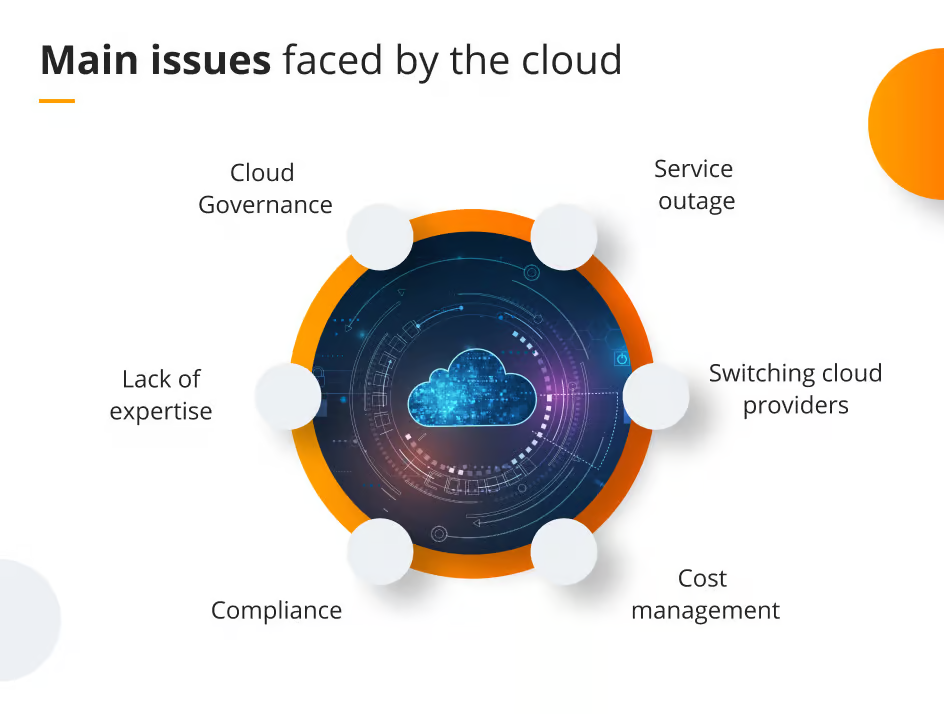
While cloud hosting in Kenya offers numerous advantages, businesses must also navigate certain challenges when considering or adopting cloud solutions. These challenges often stem from issues related to internet infrastructure, costs, data privacy concerns, and the lack of skilled professionals. In this section, we’ll explore some of the common obstacles that businesses may encounter and how they can address them.
Connectivity and Internet Reliability Issues in Kenya
One of the primary challenges for cloud hosting in Kenya is the reliability of internet connectivity. While Kenya has made tremendous strides in improving mobile internet access, rural areas still face significant connectivity issues. Slow internet speeds, frequent network outages, and inconsistent service quality can affect the performance of cloud-hosted applications.
For businesses that rely heavily on the internet to access cloud services, poor connectivity can lead to downtime, slow loading times, and ultimately, a reduced user experience. This is particularly problematic for industries like e-commerce, fintech, and education, where performance is critical.
However, with the expansion of 4G and 5G networks in Kenya, these issues are slowly being mitigated. Urban areas like Nairobi and Mombasa are seeing faster internet speeds, which significantly improve the reliability of cloud hosting. Businesses in these areas benefit from high-speed internet that ensures smoother access to cloud resources, while rural areas may need additional investment in internet infrastructure.
Possible solutions include:
- Investing in better connectivity: Businesses in urban areas can leverage the fast 4G/5G connections for reliable cloud hosting.
- Hybrid cloud solutions: Businesses can consider hybrid cloud setups that combine on-premises and cloud resources to ensure continuity during internet disruptions.
In the long term, as Kenya continues to roll out fiber optic connections and 5G technology, the internet reliability for cloud hosting should improve across the country.
High Costs of Advanced Cloud Features
While cloud hosting in Kenya offers cost-effective solutions for many businesses, the more advanced cloud services can still be expensive, especially for small businesses or startups. Services such as artificial intelligence (AI), machine learning, big data analytics, and large-scale storage options may come with high monthly fees. These features are often critical for businesses with complex needs but can stretch a limited budget.
For example, an e-commerce platform may require large amounts of storage for high-resolution images, videos, and customer data. While cloud hosting providers offer scalable storage options, the costs can quickly escalate as data usage increases.
To mitigate this issue, businesses can:
- Opt for scalable plans: Start with basic cloud packages and upgrade to more advanced services as the business grows.
- Leverage local providers: Local cloud hosting providers, such as Safaricom and Liquid Telecom, may offer more affordable plans that cater to Kenyan businesses’ specific needs.
- Use open-source tools: Many businesses can take advantage of free or low-cost open-source tools for AI and analytics to avoid additional cloud service charges.
By planning ahead and assessing the business’s growth trajectory, companies can better manage the costs associated with advanced cloud features.
Data Sovereignty and Privacy Concerns
Data sovereignty, or the concept that data is subject to the laws of the country in which it is stored, is a significant concern for businesses in Kenya adopting cloud hosting. With cloud providers operating in multiple countries and storing data in international data centers, businesses may face challenges regarding data protection and privacy compliance.
In Kenya, the Data Protection Act, 2019 requires businesses to ensure that personal data is collected, stored, and processed in a secure and compliant manner. For businesses storing sensitive customer data (e.g., payment information), this can raise concerns about how well cloud providers comply with local laws.
Additionally, businesses may worry about the risks of having data stored abroad, where it could be subject to foreign jurisdiction or government access without local oversight.
To address these concerns:
- Choose local cloud providers: Kenyan businesses can partner with local providers like Safaricom and Liquid Telecom, which offer data centers within Kenya. This ensures that data remains within the country’s borders and is subject to Kenyan laws.
- Select compliant cloud providers: Large international cloud providers like Amazon Web Services (AWS) and Microsoft Azure have data centers around the world, and they often comply with international privacy standards like GDPR. Kenyan businesses can choose providers that meet their specific data protection requirements.
As the regulatory environment for data protection continues to evolve globally and locally, businesses should ensure they stay up to date with legal requirements regarding data storage and privacy.
Lack of Skilled IT Professionals for Cloud Management
Another barrier to cloud hosting adoption in Kenya is the shortage of skilled IT professionals capable of managing and optimizing cloud-based infrastructure. While many Kenyan businesses are eager to adopt cloud solutions, the lack of local expertise can make it difficult to manage these systems effectively.
In addition to basic infrastructure management, cloud hosting often requires specialized skills in areas like cloud security, network configuration, and data migration. This shortage of skilled professionals means that many businesses may need to invest in training or outsourcing IT support to fully harness the potential of cloud hosting.
To overcome this challenge, businesses can:
- Invest in local training: Kenyan universities and institutions like Ajira Digital and Kenya Cloud Academy offer programs that can help individuals and businesses develop cloud management skills.
- Outsource IT services: For businesses that lack the resources to hire in-house IT staff, outsourcing to local managed service providers or global IT consultants can help bridge the skill gap.
As Kenya continues to grow as a digital hub, the demand for skilled cloud professionals is expected to rise. With continued investment in education and training, businesses can expect to see an increasing number of qualified IT experts in the country.
To summarize, while cloud hosting in Kenya offers numerous benefits, there are challenges that businesses need to navigate. From internet reliability issues to data privacy concerns and the need for skilled professionals, businesses must weigh these factors carefully. However, with the ongoing digital transformation in Kenya, many of these challenges are expected to be addressed in the coming years.
IV. Key Sectors Impacted by Cloud Hosting in Kenya
Cloud hosting has far-reaching benefits, not just for tech companies, but across various industries in Kenya. In this section, we’ll explore how cloud hosting in Kenya is transforming key sectors, enabling businesses to improve their services, scale operations, and meet the demands of a digital-first economy.

Cloud Hosting in E-Commerce: Driving Growth for Kenyan Online Stores
Kenya has seen a remarkable rise in e-commerce, with local platforms and global players like Jumia and Kilimalia taking advantage of the digital shift. Cloud hosting is playing a critical role in helping e-commerce businesses meet their growing demands.
One of the most notable advantages of cloud hosting for e-commerce businesses is scalability. E-commerce platforms often experience unpredictable spikes in traffic during promotions or seasonal sales. Cloud hosting allows these businesses to scale up their infrastructure on demand without needing to invest in expensive hardware.
For example, Jumia Kenya and other local e-commerce platforms leverage cloud hosting to handle high volumes of transactions during events like Black Friday or Christmas sales. This ensures that websites remain operational, even under heavy traffic.
Key benefits of cloud hosting for e-commerce in Kenya:
- Scalability: The ability to quickly scale infrastructure during high-demand periods ensures that e-commerce sites remain fast and reliable.
- Improved performance: With multiple servers distributed globally, cloud hosting helps deliver fast loading times for customers, improving the shopping experience.
- Security: Cloud hosting providers offer robust security features like SSL encryption, firewalls, and data backup, which are crucial for protecting customer data, particularly payment information.
As e-commerce continues to grow in Kenya, cloud hosting will remain a key driver, helping businesses stay competitive and meet customer expectations for seamless, fast, and secure online shopping experiences.
Education: Cloud Hosting’s Role in Virtual Classrooms and E-Learning
The education sector in Kenya has also greatly benefited from the rise of cloud hosting. The COVID-19 pandemic forced many educational institutions to adapt quickly to online learning, and cloud-based solutions provided the infrastructure needed for this transformation.

Cloud hosting in Kenya enables educational institutions—from primary schools to universities—to host learning management systems (LMS), collaborate on documents, and even conduct live online classes. Cloud-based e-learning platforms are easily scalable, cost-effective, and accessible, making education more inclusive and affordable for students across the country.
For instance, the University of Nairobi uses cloud-hosted platforms to facilitate distance learning for students, allowing them to access course materials, submit assignments, and interact with instructors in real time. Similarly, e-learning platforms like M-Shule and Makaazi leverage cloud hosting to offer affordable educational content to students in rural areas, bridging the digital divide.
Key benefits of cloud hosting for education in Kenya:
- Accessibility: Students and teachers can access cloud-hosted platforms anytime, anywhere, as long as they have internet access.
- Collaboration: Cloud-hosted tools, like Google Classroom, allow for seamless collaboration between students and teachers.
- Cost-effective solutions: Cloud hosting reduces the need for physical infrastructure, making it more affordable for schools and universities.
With Kenya’s commitment to advancing its educational sector through digital means, cloud hosting will remain a cornerstone for enabling accessible and quality education across the country.
Healthcare: Cloud Hosting for Managing Patient Data and Telemedicine
In Kenya, healthcare is one of the sectors that can greatly benefit from cloud hosting. As the country continues to digitize its health records, cloud hosting provides a secure and scalable solution for managing sensitive patient information and supporting telemedicine services.

Health facilities in Kenya, from large public hospitals to private clinics, are increasingly relying on cloud-based electronic health records (EHR) systems to store and manage patient data. This reduces the reliance on paper-based systems, which can be prone to errors, theft, or loss. By moving health records to the cloud, hospitals can provide better patient care by making data more accessible and enabling quick decision-making.
Additionally, the rise of telemedicine in Kenya is helping bridge the healthcare gap in rural areas. With cloud-hosted platforms, doctors can conduct virtual consultations with patients, share test results, and monitor ongoing treatments remotely. This has been particularly beneficial for regions with limited access to medical professionals.
Key benefits of cloud hosting for healthcare in Kenya:
- Secure data management: Cloud hosting offers encrypted storage, secure backups, and disaster recovery, ensuring that patient data is protected.
- Remote healthcare services: Telemedicine platforms that are hosted in the cloud allow healthcare providers to reach remote patients with ease, offering consultations and medical advice.
- Efficient collaboration: Cloud hosting enables multiple healthcare providers to collaborate on a single patient record, improving treatment outcomes.
As Kenya’s healthcare system continues to evolve and digital health solutions become more widespread, cloud hosting will remain an integral part of modernizing the sector and improving access to healthcare for all Kenyans.
Finance: How Cloud Hosting is Transforming Kenyan Fintech
Kenya’s financial services sector, particularly the fintech industry, has experienced explosive growth in recent years. Mobile money services like M-Pesa have revolutionized how Kenyans send and receive money, and cloud hosting plays a vital role in ensuring these platforms remain secure, reliable, and scalable.

Fintech companies in Kenya are increasingly relying on cloud-hosted infrastructure to handle large volumes of transactions, manage sensitive customer data, and ensure high levels of uptime. With mobile money becoming central to Kenya’s economy, the need for cloud hosting that supports high availability is critical.
For instance, M-Pesa uses cloud solutions to store and process vast amounts of transaction data, while fintech platforms like PesaPal and Lipa na M-Pesa rely on cloud hosting for seamless payment processing and integrations with other services.
Key benefits of cloud hosting for fintech in Kenya:
- Scalable infrastructure: Cloud hosting enables fintech companies to handle large transaction volumes, particularly during peak periods, without compromising on performance.
- Security and compliance: As financial institutions handle sensitive data, cloud hosting ensures compliance with security regulations and provides robust fraud prevention features.
- Disaster recovery: Cloud solutions help ensure that financial data is safely backed up, and in the event of a system failure, operations can quickly resume.
With mobile money and fintech services continuing to expand in Kenya, cloud hosting will remain a crucial pillar of the sector’s infrastructure, helping these platforms scale securely and reliably.
To conclude, cloud hosting in Kenya has made a transformative impact on several industries, including e-commerce, education, healthcare, and finance. As more sectors embrace digital technologies, cloud hosting will continue to play a central role in ensuring that businesses can scale, perform efficiently, and secure their data.
V. Comparing Cloud Hosting in Kenya with Other African Countries
As cloud hosting continues to gain traction across Africa, it is important to consider how cloud hosting in Kenya compares to that of other African countries. While Kenya is quickly becoming a leader in digital infrastructure, it’s valuable to examine the position of Kenya’s cloud hosting market within the broader African landscape, especially in comparison to countries like South Africa, Nigeria, and Egypt. In this section, we will look at the key factors that differentiate Kenya’s cloud hosting landscape from those of other African nations.

How Does Cloud Hosting in Kenya Compare to South Africa, Nigeria, and Egypt?
Kenya is often seen as a digital leader in East Africa, thanks to its significant strides in mobile payments (such as M-Pesa) and a growing tech ecosystem. However, when it comes to cloud hosting in Africa, countries like South Africa, Nigeria, and Egypt have also seen rapid cloud adoption and expansion.
Here’s how Kenya compares to these other countries:
- South Africa: South Africa has long been regarded as Africa’s largest and most mature cloud hosting market. The country benefits from advanced infrastructure, widespread fiber connectivity, and a more developed IT talent pool. Leading cloud providers, like Amazon Web Services (AWS) and Microsoft Azure, have established data centers in South Africa, making it a regional hub for cloud hosting. In comparison, Kenya’s cloud hosting infrastructure is still growing, but it is catching up quickly, especially with the increasing presence of global players like AWS and Azure.
- Nigeria: Nigeria, as Africa’s most populous country and largest economy, is a significant player in the cloud hosting market. While Nigeria’s internet infrastructure has seen improvements in recent years, it still faces challenges such as internet connectivity reliability and power outages. These issues sometimes hinder the performance of cloud services. Kenya, by contrast, is increasingly addressing these challenges, with investments in fiber optic networks and more stable 4G/5G services, making it a more attractive destination for cloud hosting providers.
- Egypt: Egypt has seen a rise in cloud adoption due to government support and strong investments in ICT infrastructure. Like Kenya, Egypt benefits from proximity to major Middle Eastern markets, but it lacks the same degree of mobile-first initiatives that have propelled Kenya’s rise in digital services, such as mobile money and cloud-based mobile applications. Kenya’s cloud hosting market is growing rapidly due to its mobile-first culture, as businesses are increasingly adopting cloud solutions to enhance mobile service delivery.
Kenya’s Competitive Edge in East Africa
Kenya’s position as a digital hub for East Africa gives it a unique advantage when it comes to cloud hosting. While South Africa leads in cloud infrastructure in Africa, Kenya is rapidly catching up by capitalizing on its geographical location, technological adoption, and mobile-first culture.
Several factors contribute to Kenya’s competitive edge in the region:
- Strategic location: Kenya serves as a gateway to East Africa, with a favorable location to support business connections across the region, particularly in countries like Uganda, Tanzania, Rwanda, and Ethiopia. As cloud services become more widely adopted in these countries, Kenya’s cloud hosting market is well-positioned to support this growth.
- Mobile-first culture: With high mobile penetration rates and a strong mobile money ecosystem, Kenya has become a leader in mobile services. Cloud hosting in Kenya benefits from the robust use of mobile applications, which drive demand for cloud solutions.
- Growing tech ecosystem: The Nairobi-based Silicon Savannah is a hub for innovation, with startups and tech companies rapidly adopting cloud solutions to scale operations. This growing ecosystem is attracting both local and international cloud providers looking to capitalize on the demand for cloud-based services.
For example, Safaricom, Kenya’s largest telecom company, has partnered with Microsoft Azure to provide cloud hosting solutions for local businesses. This partnership helps businesses leverage scalable infrastructure while benefiting from Microsoft’s global reach. Such collaborations help Kenya build its cloud hosting infrastructure and attract foreign investments in the sector.
Regional Opportunities: The Future of Cloud Hosting in East Africa
As East Africa continues to emerge as a growing digital economy, cloud hosting will play a critical role in supporting businesses across the region. Kenya, with its strong digital infrastructure and strategic partnerships, is in an ideal position to take advantage of the growing demand for cloud hosting in neighboring countries.

- Regional expansion: As businesses in Uganda, Tanzania, Rwanda, and Ethiopia increasingly turn to cloud hosting for their IT infrastructure needs, Kenya can benefit from its position as a regional cloud hub. Kenyan cloud providers, like Safaricom and Liquid Telecom, can extend their services to these neighboring markets, offering both local expertise and global cloud solutions.
- Increasing demand for digital services: The rising adoption of mobile money, e-commerce, and e-learning platforms across East Africa presents a massive opportunity for cloud hosting providers in Kenya. The growth of digital services in these sectors is accelerating the need for cloud solutions to support them. By capitalizing on this demand, Kenya’s cloud hosting providers can cater to the entire East African region.
- Collaboration and innovation: The growth of technology hubs like Nairobi provides a fertile ground for innovation in cloud-based services. Kenyan businesses, startups, and tech companies can leverage the latest cloud technologies to improve their operations and create innovative solutions for other East African countries.
With Kenya leading the charge in East Africa’s digital transformation, it is poised to become a significant player in the continent’s growing cloud hosting market.
To conclude, while South Africa, Nigeria, and Egypt have well-established cloud hosting markets, Kenya’s growth trajectory places it in a strong competitive position in the East African region. With its mobile-first culture, strategic partnerships, and rapidly evolving tech ecosystem, Kenya is well-equipped to lead the cloud hosting revolution in East Africa.
VI. The Future of Cloud Hosting in Kenya (2025 and Beyond)
As we move toward 2025, the future of cloud hosting in Kenya looks promising. With the increasing digital transformation of businesses, education, healthcare, and finance sectors, the demand for scalable, reliable, and secure cloud services will only grow. This section will explore the predictions and key trends shaping the future of cloud hosting in Kenya, including the role of 5G, sustainable cloud practices, and regional growth.
Predictions for Cloud Hosting in Kenya in 2025
By 2025, cloud hosting in Kenya is expected to experience exponential growth as more businesses and institutions shift to cloud-based solutions. Several factors will drive this change, including government support, increased internet penetration, and the rise of digital services across various sectors.
Some key predictions for the future of cloud hosting in Kenya include:
- Widespread Cloud Adoption Across Industries: Industries like finance, healthcare, e-commerce, and education will continue to rely heavily on cloud hosting to scale operations, improve efficiency, and provide better services to customers. As more businesses adopt digital solutions, cloud hosting will become the default infrastructure solution for organizations of all sizes.
- Increase in Local Data Centers: With growing concerns around data sovereignty, cloud providers in Kenya are likely to expand their local data center offerings. Companies like Safaricom and Liquid Telecom have already started building local data centers, and this trend is expected to continue. Having local data centers ensures that businesses comply with local data protection laws, reduces latency, and improves service reliability.
- Improved Connectivity and Network Infrastructure: The development of 5G and the expansion of fiber optic networks will significantly improve internet speeds and reliability across Kenya. This will be crucial in making cloud hosting more effective, particularly in rural areas. Enhanced connectivity will enable businesses in these areas to take full advantage of the scalability and flexibility offered by cloud hosting solutions.
- Growing Number of Cloud Service Providers: More international and local players will enter the Kenyan market as demand for cloud hosting services grows. The presence of global giants like Amazon Web Services (AWS), Microsoft Azure, and Google Cloud will continue to push the envelope on service offerings, while local providers will focus on tailored solutions that meet the specific needs of Kenyan businesses.
The Role of 5G in Enhancing Cloud Hosting Performance
The advent of 5G technology will play a pivotal role in the evolution of cloud hosting in Kenya. As 5G networks become more widespread, businesses will experience faster speeds and more stable connections, significantly enhancing the performance of cloud-based applications.
5G networks provide higher bandwidth and lower latency, which means that businesses can handle more traffic, upload and download data faster, and access cloud resources in real time. For industries like e-commerce, finance, and telemedicine, this is a game-changer, as it will enable more reliable, low-latency services.
For example, mobile money services like M-Pesa could see improved transaction speeds, which will enhance user experiences and increase transaction volumes. Similarly, e-commerce platforms in Kenya will benefit from faster cloud infrastructure, leading to quicker page load times and smoother customer interactions.
Key benefits of 5G for cloud hosting in Kenya:
- Faster data transfer speeds: 5G enables faster access to cloud-hosted applications, reducing delays and improving performance.
- Lower latency: Reduced latency means cloud-based applications, such as real-time collaboration tools or cloud gaming services, will function more effectively.
- More reliable service: The high-speed, low-latency nature of 5G will make cloud services more reliable, reducing the chance of service interruptions.
As 5G technology continues to roll out across Kenya, cloud hosting providers will be able to offer more powerful and reliable services to businesses, further driving the adoption of cloud-based infrastructure.
Sustainability: The Move Towards Green Cloud Hosting
Another key trend shaping the future of cloud hosting in Kenya is the increasing focus on sustainability. As climate change and environmental concerns become more pressing, there is a growing demand for green cloud solutions—cloud services that minimize energy consumption and reduce carbon footprints.

Cloud providers are already working toward sustainability by building energy-efficient data centers, using renewable energy sources, and optimizing their infrastructure to reduce environmental impact. For Kenyan businesses looking to align with global sustainability goals and demonstrate their commitment to environmental stewardship, choosing green cloud hosting solutions will become increasingly important.
For example, Liquid Telecom has been investing in energy-efficient infrastructure and collaborating with global sustainability initiatives to ensure their data centers meet global green standards. This is expected to influence more Kenyan businesses to follow suit by choosing sustainable cloud hosting providers.
Key benefits of green cloud hosting in Kenya:
- Lower environmental impact: Cloud providers adopting sustainable practices help reduce energy consumption and greenhouse gas emissions.
- Cost savings: Energy-efficient data centers can reduce operational costs, which could result in lower prices for businesses.
- Aligning with global sustainability trends: Kenyan businesses adopting green cloud hosting demonstrate their commitment to sustainability, which is becoming increasingly important to customers and investors.
By 2025, the sustainability factor will likely play a significant role in the decision-making process for Kenyan businesses when selecting cloud hosting services. The push for greener solutions will help shape the cloud hosting landscape across the country.
Regional Growth and Expanding Opportunities in East Africa
Kenya is expected to be a central player in the East African cloud hosting market as the demand for cloud services in neighboring countries continues to rise. As businesses across Uganda, Tanzania, Rwanda, and Ethiopia increasingly adopt digital services, Kenya’s cloud hosting providers will play a crucial role in supplying infrastructure solutions to support this regional growth.
Kenya’s role as a digital hub for the region will likely strengthen in the coming years, as cloud hosting continues to serve as the backbone for mobile payments, e-commerce, healthcare, and education in the region. The expansion of regional data centers, greater collaboration between local tech companies, and the rise of East African startups will all drive the demand for cloud hosting services.
Kenya’s investment in digital infrastructure and cloud hosting will help create a connected East African ecosystem that enables businesses to seamlessly scale across borders. The Kenyan market is poised to take advantage of this opportunity, positioning itself as the go-to destination for cloud services in the region.
To conclude, the future of cloud hosting in Kenya looks bright. By 2025, we expect to see significant advancements in technology, such as 5G and green cloud hosting, alongside continued investment in local data centers and infrastructure. As businesses in Kenya continue to embrace digital solutions, cloud hosting will remain an essential component of their growth strategies, providing them with the flexibility, security, and scalability needed to compete in the global digital economy.
VII. Is Cloud Hosting in Kenya Really Worth the Hype in 2025?
As we conclude our exploration of cloud hosting in Kenya, it’s time to reflect on whether this technology lives up to the buzz and if businesses should invest in it. In this section, we will summarize the benefits and challenges of cloud hosting in Kenya, offer a final verdict, and provide recommendations for businesses considering adopting cloud solutions.

Recap of the Benefits and Challenges of Cloud Hosting in Kenya
Cloud hosting in Kenya offers a wealth of benefits for businesses, especially as the country continues its digital transformation. However, it is essential to balance these advantages with the challenges that companies might face in this rapidly evolving landscape.
Benefits of Cloud Hosting in Kenya:
- Cost-Effectiveness: Cloud hosting allows businesses, especially startups and SMEs, to avoid hefty upfront capital investments in IT infrastructure. With the pay-as-you-go model, businesses can scale up or down based on actual usage, making it highly affordable.
- Scalability: As businesses grow, their IT needs change. Cloud hosting enables businesses to increase or decrease resources (such as storage and computing power) to match their current demand, allowing for business growth without limitations.
- Reliability and Uptime: Cloud hosting offers 99.99% uptime guarantees thanks to the redundancy of multiple servers. This ensures minimal downtime, which is crucial for businesses reliant on web services and online transactions.
- Security: With data encryption, regular backups, and advanced security protocols, cloud hosting providers protect sensitive data from cyber threats, ensuring compliance with Kenya’s data protection laws.
Challenges of Cloud Hosting in Kenya:
- Connectivity Issues: While internet penetration is high in urban areas, unreliable internet connections in rural Kenya may hinder businesses from fully benefiting from cloud hosting. The performance of cloud-based services can be significantly impacted by slow or inconsistent internet speeds.
- High Costs for Advanced Services: While basic cloud hosting services are affordable, more advanced features such as AI, machine learning, and big data analytics can be expensive. Businesses need to be mindful of costs as they scale.
- Data Sovereignty Concerns: Kenyan businesses may be concerned about data privacy and compliance with local laws if their data is stored on international servers. This is a particular challenge for industries like finance and healthcare, which handle sensitive customer information.
- Shortage of Skilled IT Professionals: Although Kenya’s digital ecosystem is rapidly growing, there is still a shortage of skilled professionals with expertise in managing cloud infrastructure. This can lead to businesses needing to outsource services or invest in training programs for employees.
Final Verdict: Should Kenyan Businesses Embrace Cloud Hosting in 2025?
Despite the challenges, cloud hosting in Kenya is undeniably worth the hype. The technology has become a cornerstone of digital transformation for businesses across various industries, and the benefits far outweigh the drawbacks. As Kenya continues to advance in digital infrastructure, the country is becoming an ideal location for cloud-based solutions.
Here’s why cloud hosting is definitely worth considering for Kenyan businesses in 2025:
- Affordability and Flexibility: With its pay-as-you-go model, cloud hosting allows businesses to manage their budgets efficiently, ensuring they only pay for the resources they need at any given time.
- Scalability and Growth: Whether a business is just starting out or is in the process of expanding, cloud hosting offers the flexibility to scale IT resources as business needs evolve.
- Security and Reliability: With enhanced security features and better uptime guarantees, cloud hosting provides the peace of mind businesses need to operate without worrying about downtime or data loss.
- Government and Industry Support: The Kenyan government’s push for digital transformation through policies like Vision 2030 and the increasing number of local data centers make cloud hosting a safe, long-term solution.
While there are some hurdles, such as connectivity issues and data sovereignty concerns, these challenges are being addressed with improved internet infrastructure, local data center development, and stricter data protection regulations.
Call to Action: Exploring Cloud Hosting Solutions for Your Business
If you are a business owner or decision-maker in Kenya, now is the time to consider cloud hosting as part of your digital strategy. Here are some steps to help you explore cloud hosting options for your business:
- Assess Your Needs: Determine what your business needs in terms of storage, computing power, and bandwidth. Start with the basics and explore how your cloud hosting provider can scale with your business.
- Choose the Right Provider: Evaluate both local and international cloud providers. Local providers like Safaricom and Liquid Telecom may offer more personalized solutions, while global giants like AWS and Microsoft Azure bring extensive experience and resources.
- Start Small, Scale Gradually: Start with a basic cloud hosting plan and scale as your business grows. This ensures that you are only paying for what you need while taking advantage of the benefits of cloud hosting.
- Focus on Security and Compliance: Ensure that your cloud hosting provider complies with Kenya’s data protection laws and offers robust security features to safeguard your data.
- Invest in Skills and Training: If your business lacks in-house expertise, consider training employees or outsourcing to managed service providers that specialize in cloud management.
By embracing cloud hosting in Kenya, your business can stay competitive, agile, and ready to meet the demands of the digital age.
To summarize, cloud hosting in Kenya is not just a passing trend but an essential tool for businesses looking to thrive in 2025 and beyond. By leveraging the flexibility, scalability, security, and cost benefits, businesses can future-proof their operations and maintain a strong presence in the increasingly digital world.